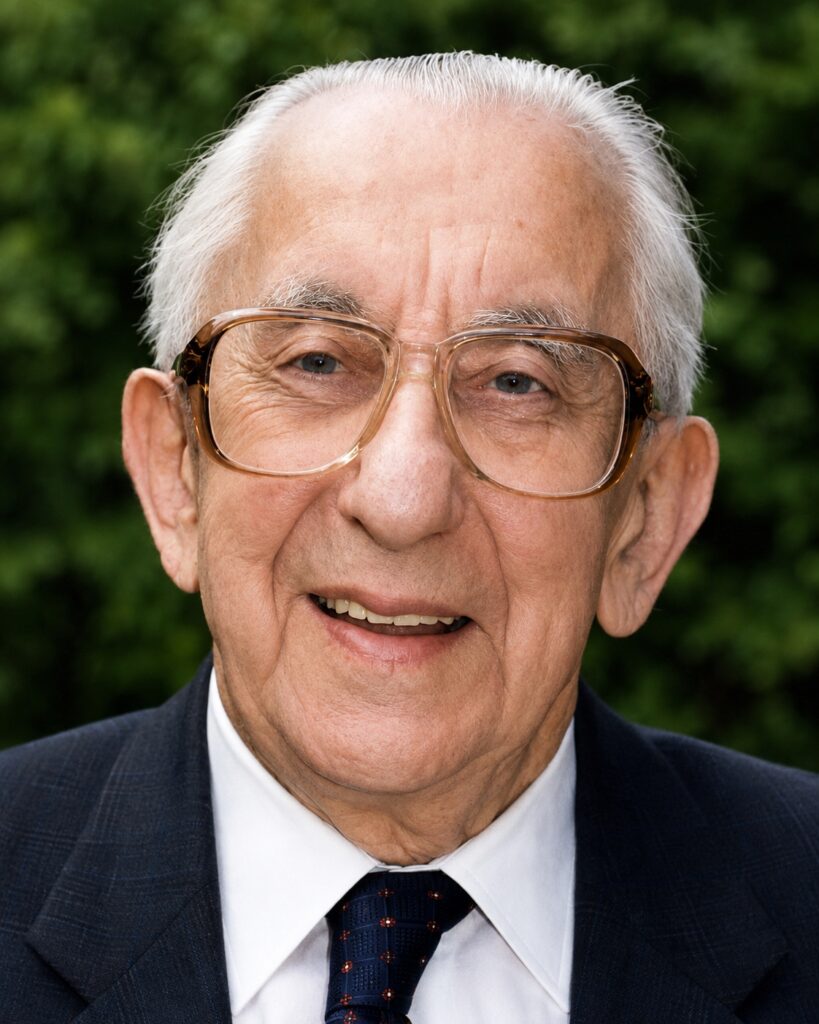
Married in 1938 in Bulawayo, Zimbabwe and had no children
The Patriarch of Bulawayo Jewry
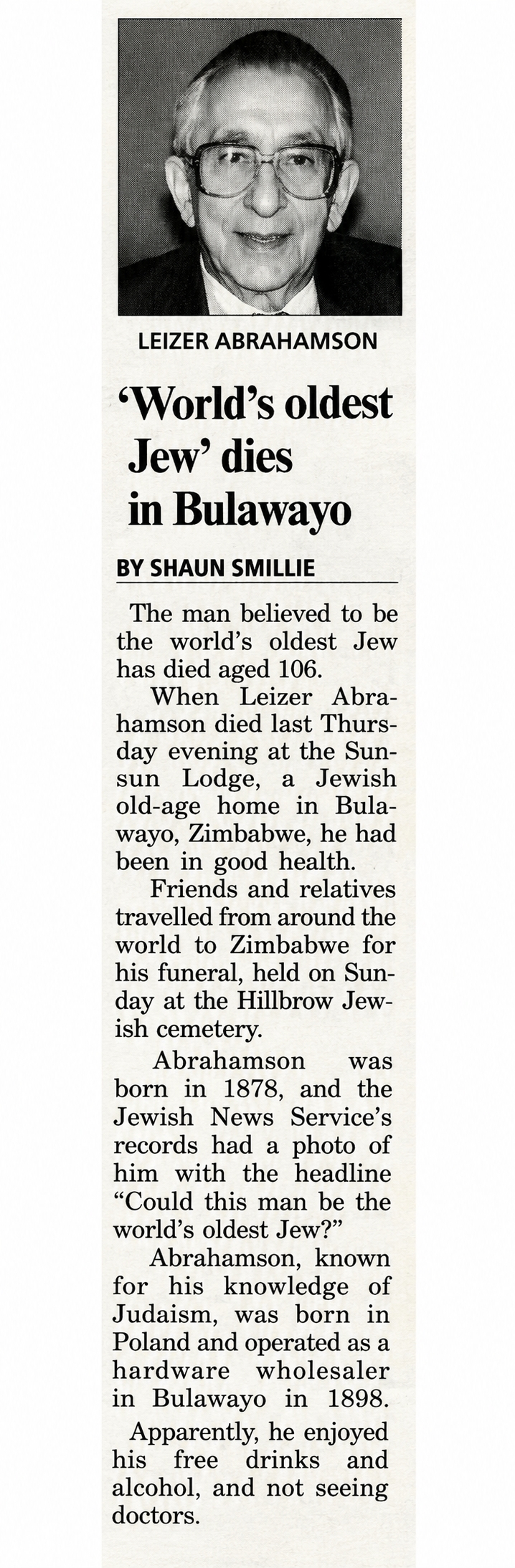
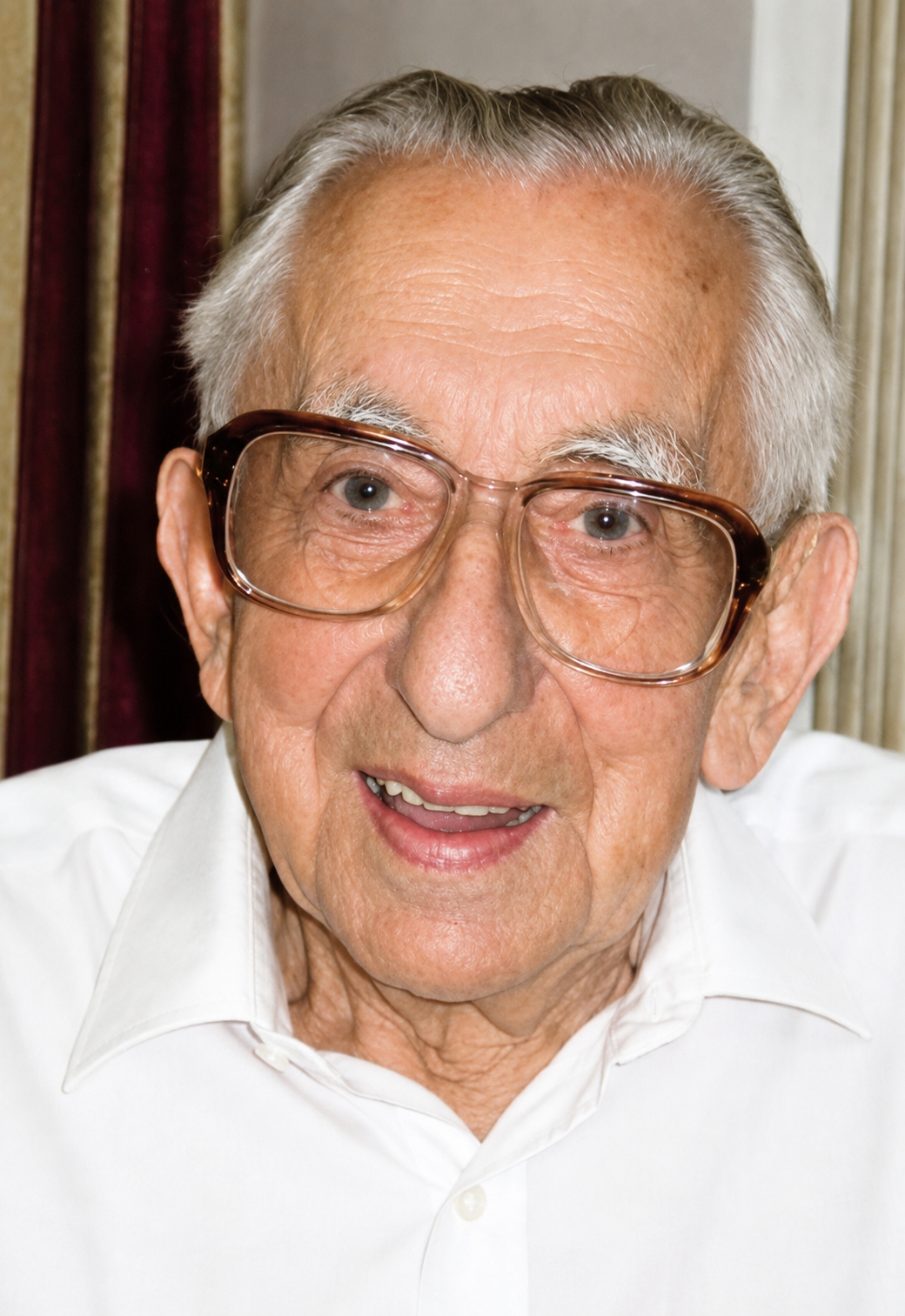
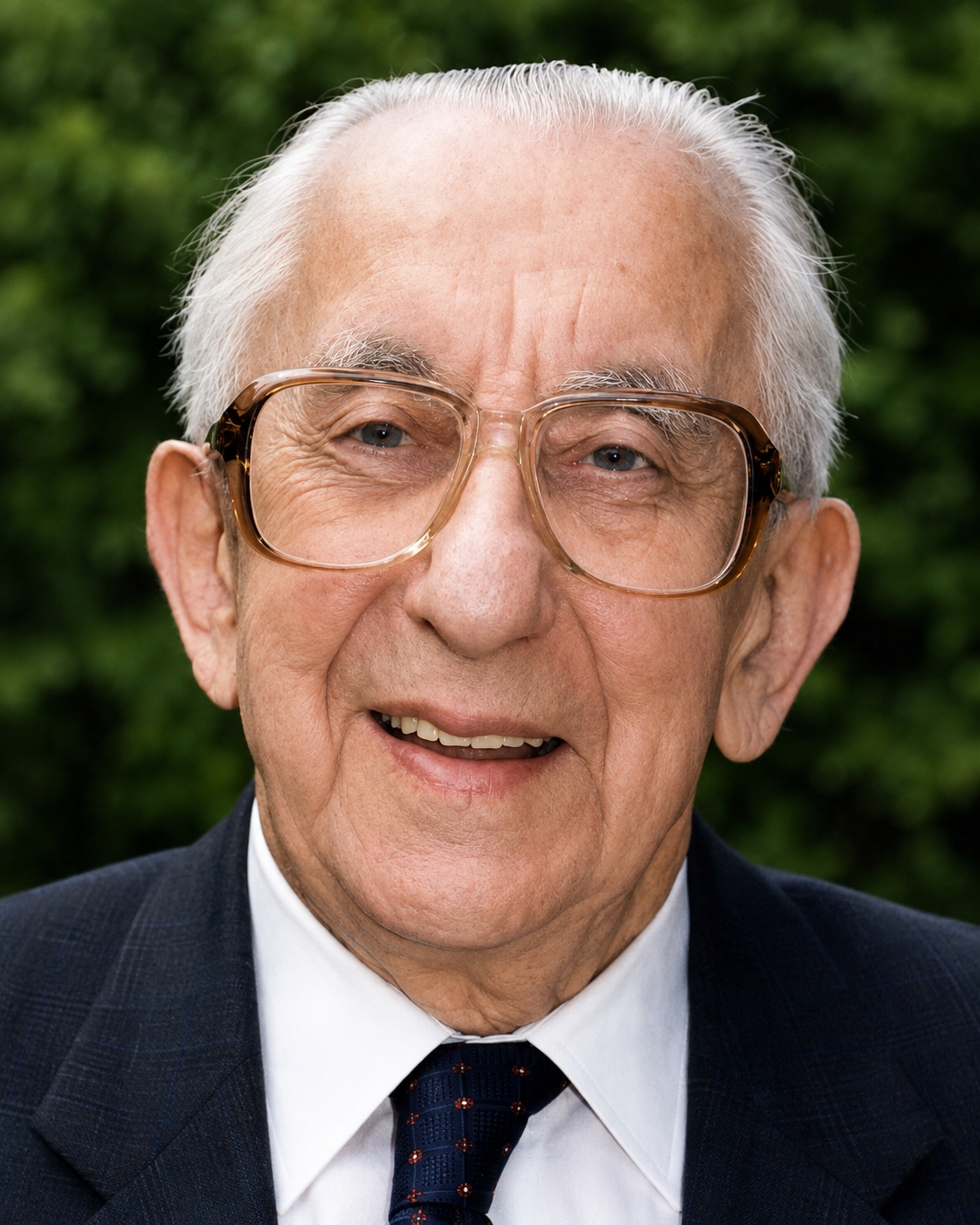
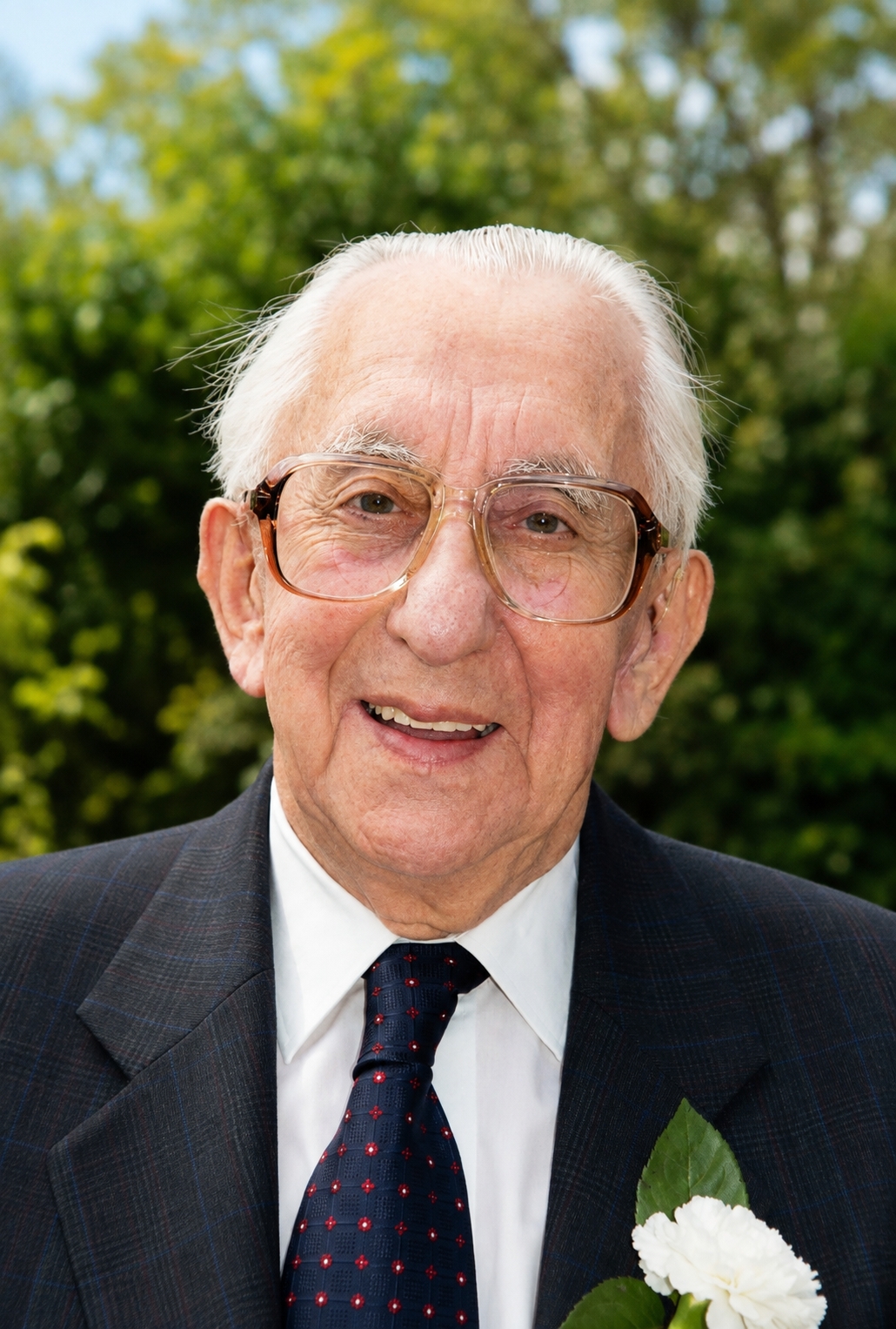
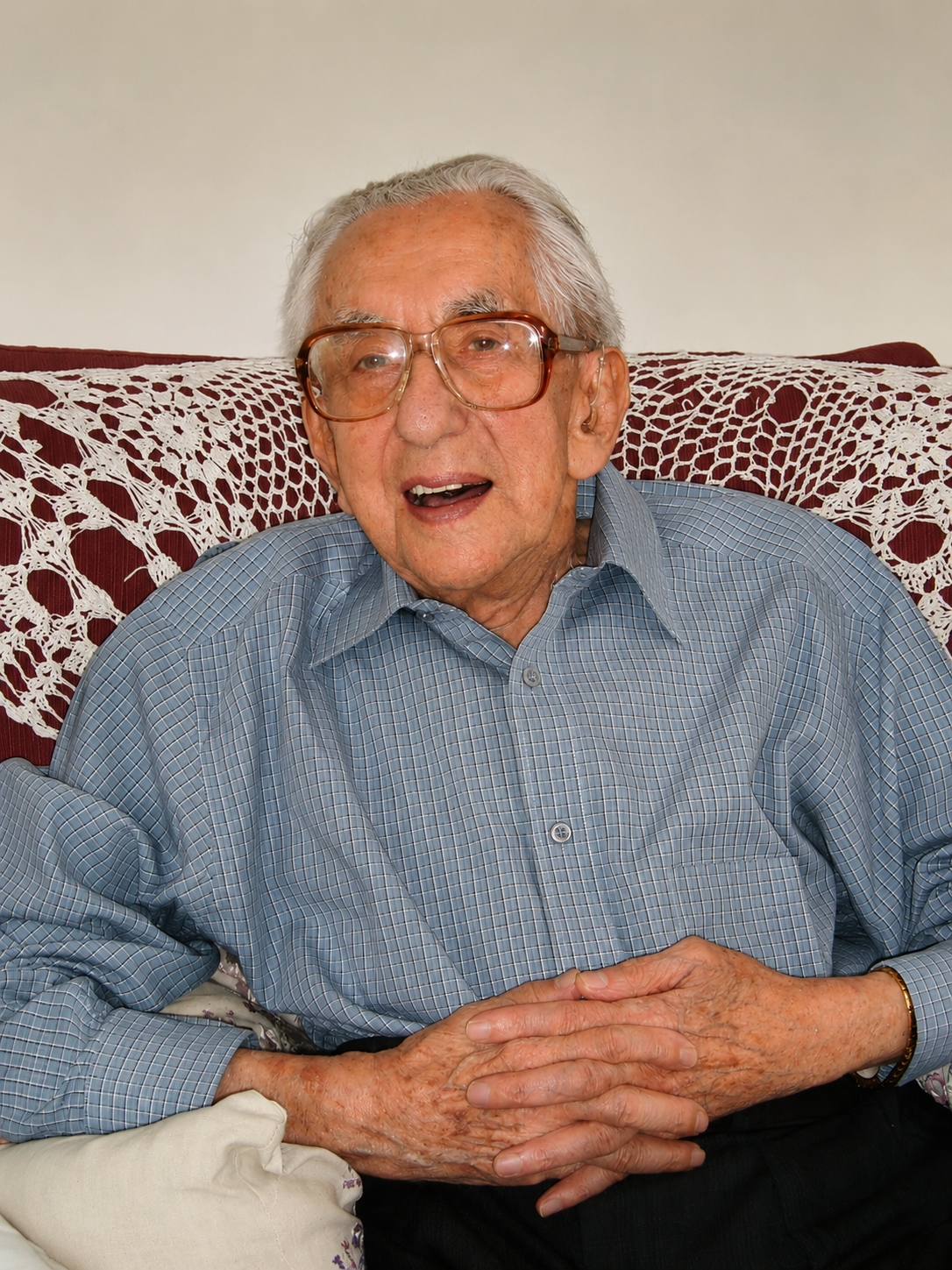
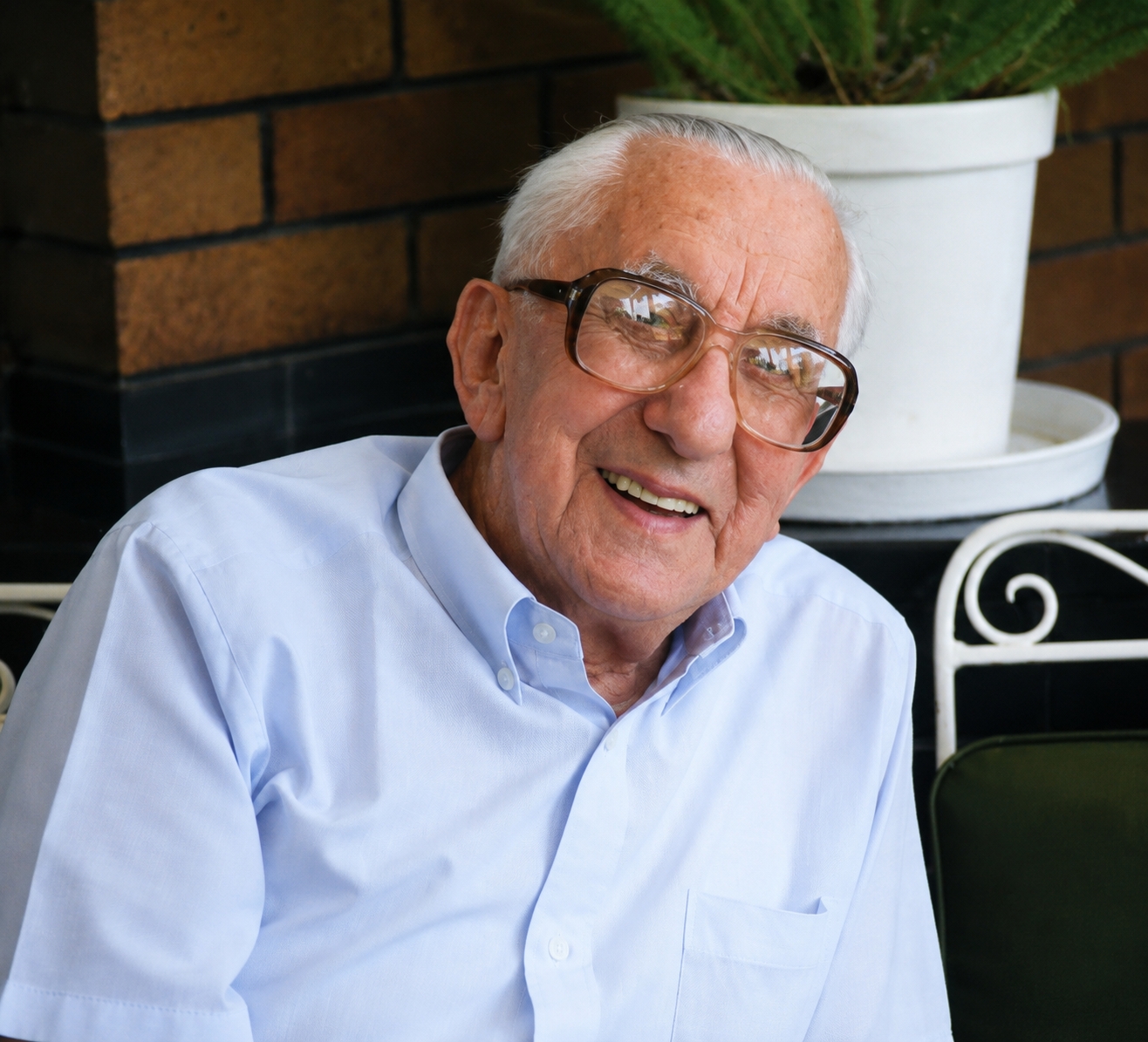
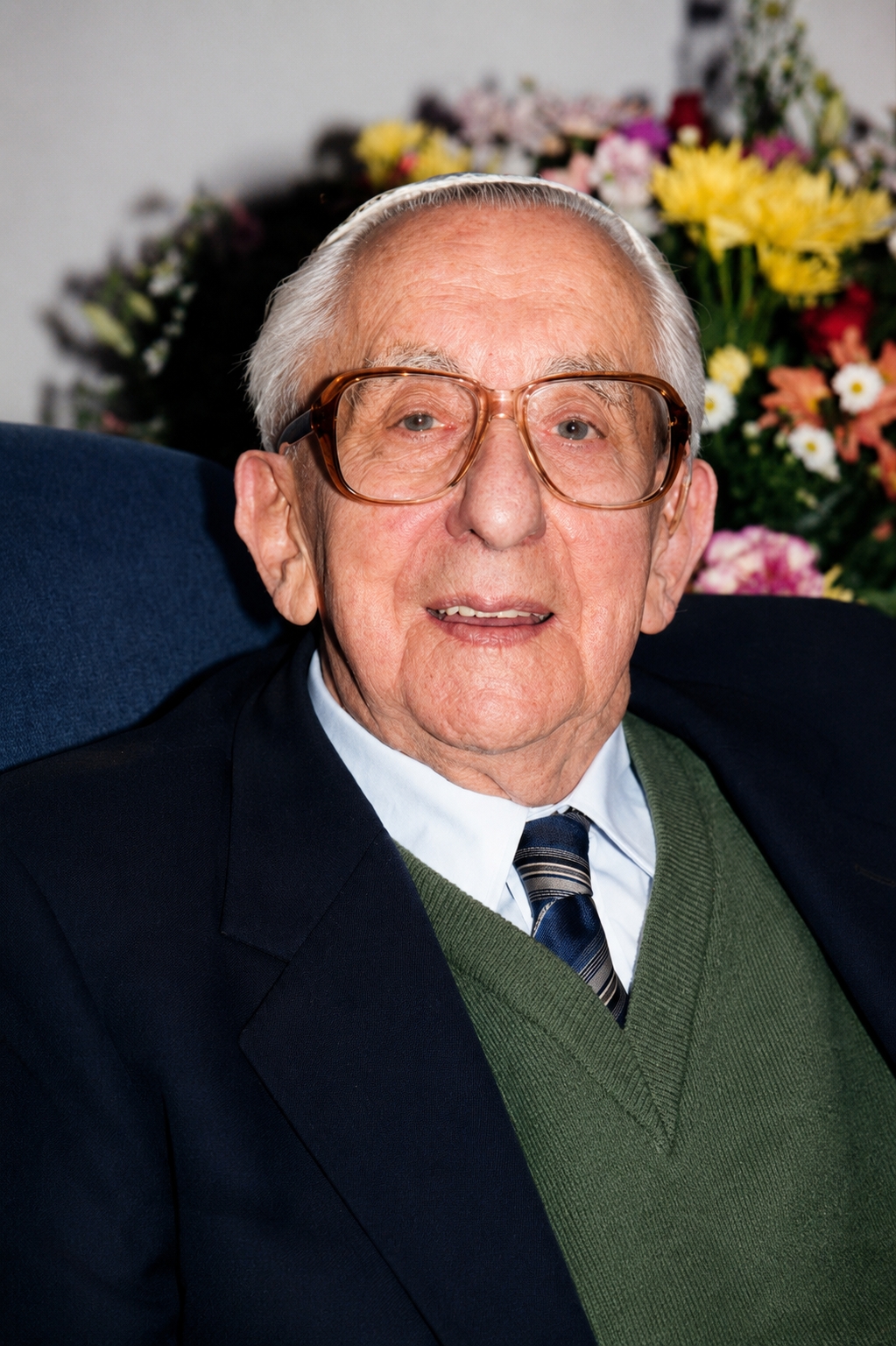
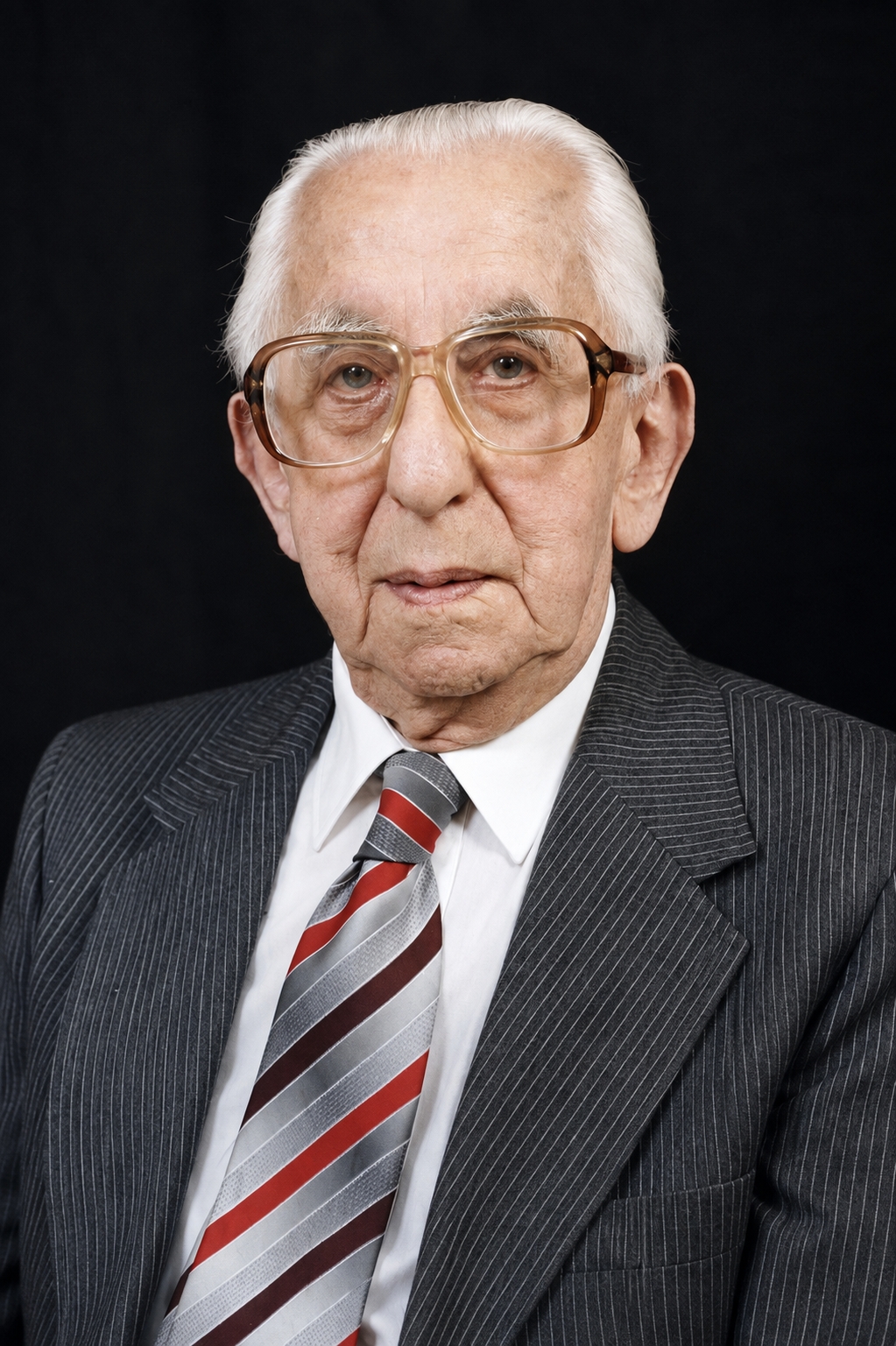
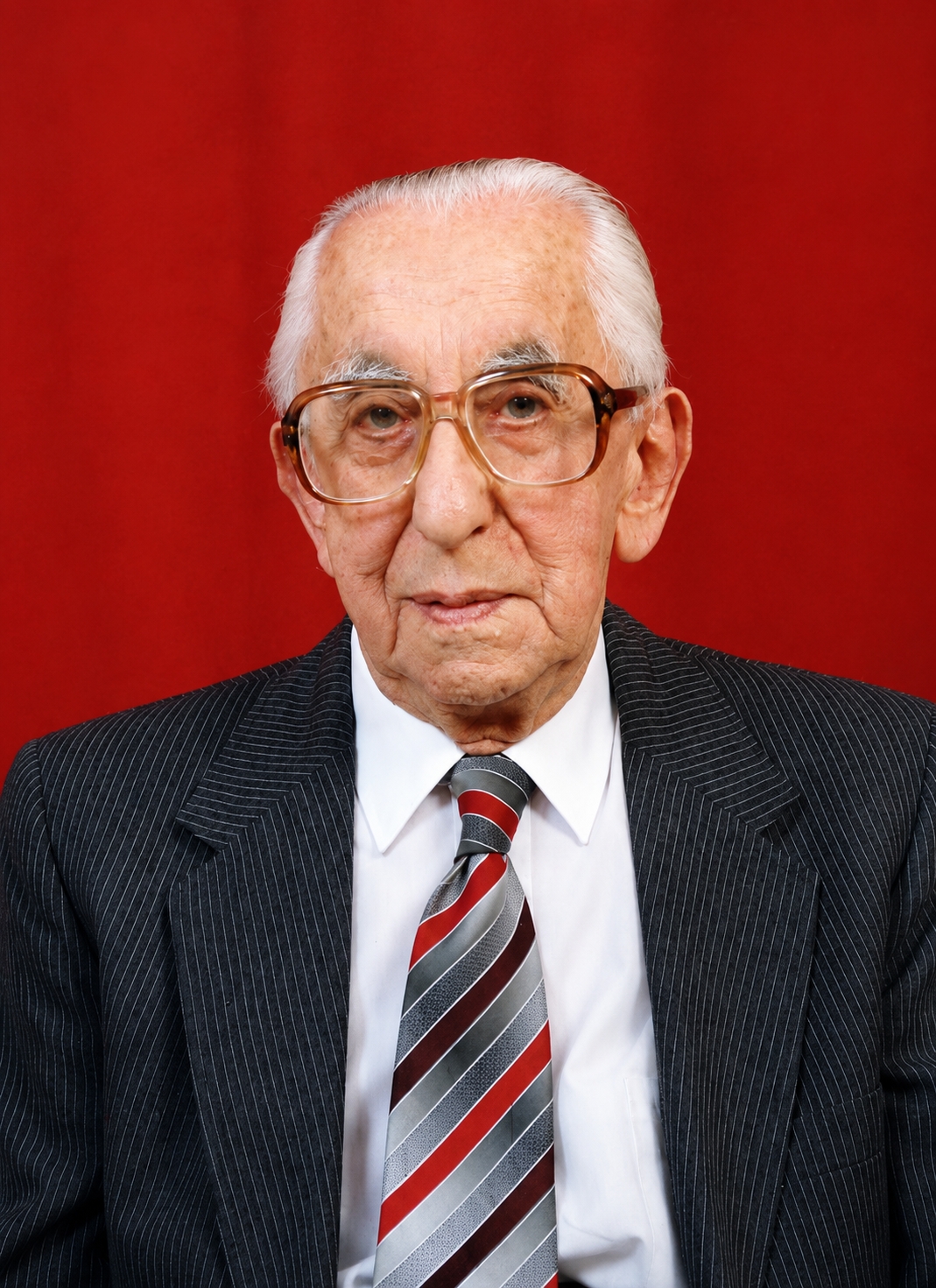
Few members of Zimbabwe's Jewish community commanded the affection and respect earned by Leizer Abrahamson. Living to the remarkable age of 108, he witnessed three centuries, two World Wars, the fall of empires, the rebirth of Poland, the creation of the State of Israel, and the transformation of Southern Rhodesia into Zimbabwe. Throughout these extraordinary years, he remained steadfast in his devotion to Judaism, his family, and the Bulawayo Jewish community. By the time of his death in May 2007, he was widely regarded as the spiritual patriarch of Bulawayo Jewry—a living link to the vanished world of Eastern European Jewish life.
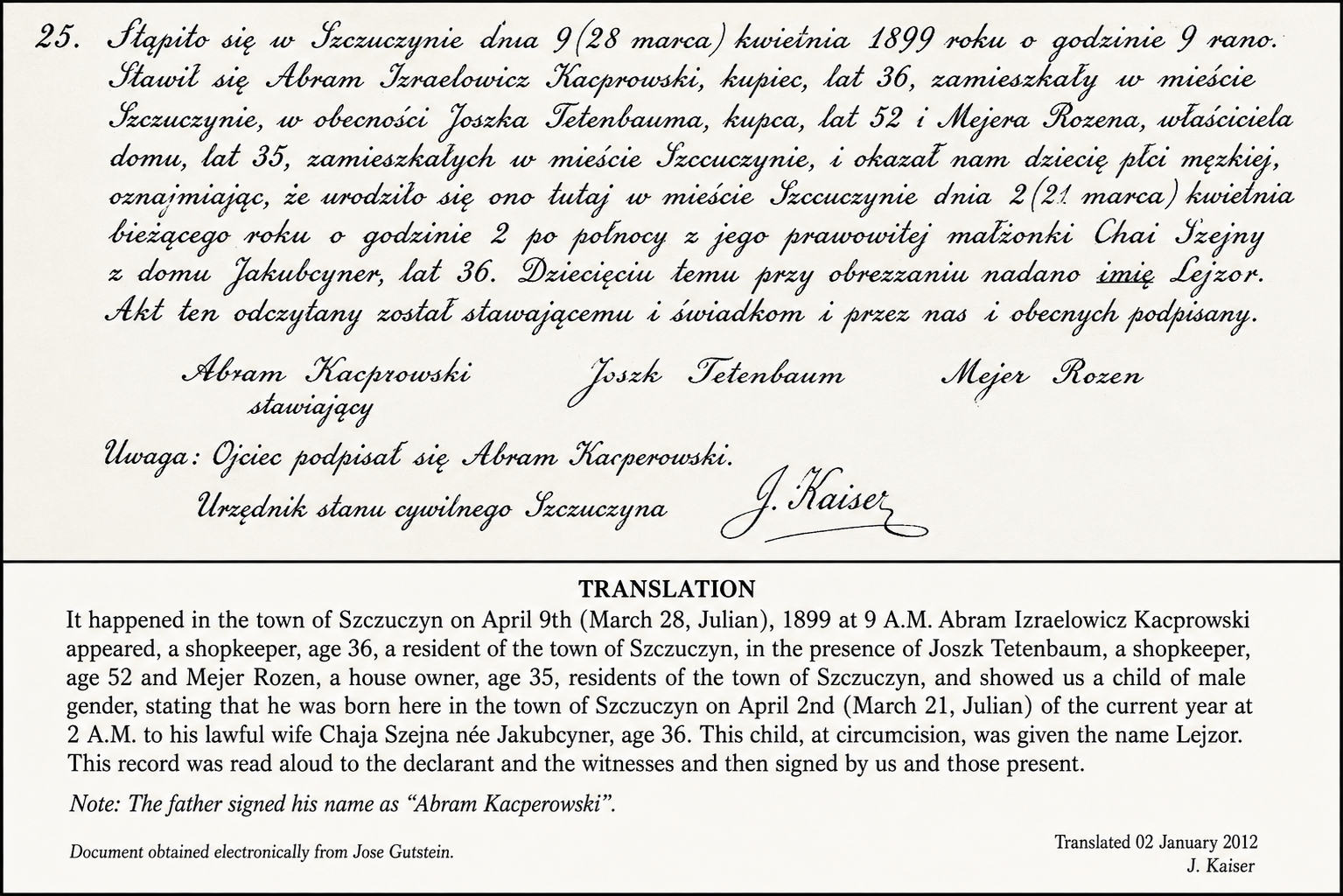
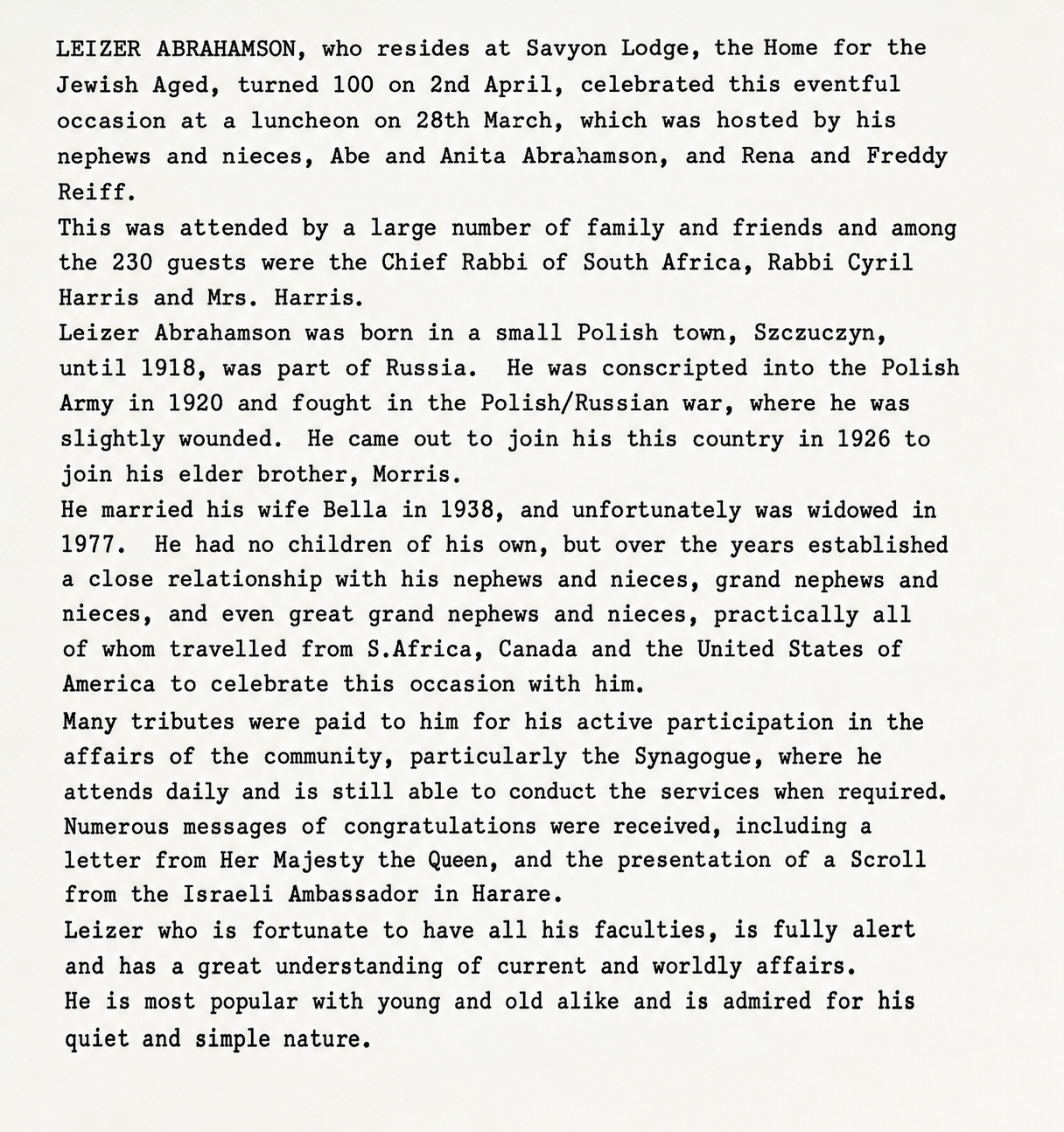
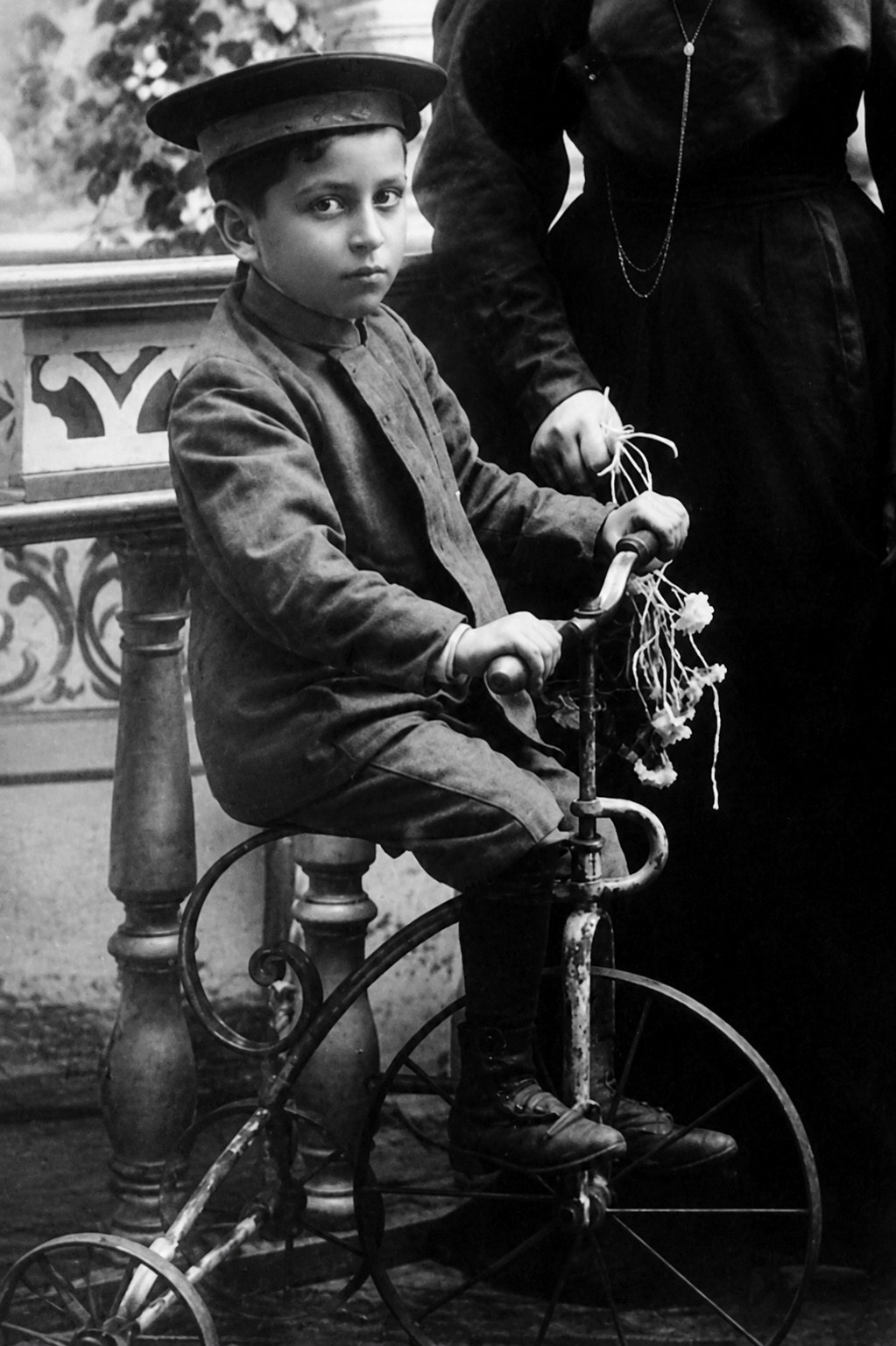
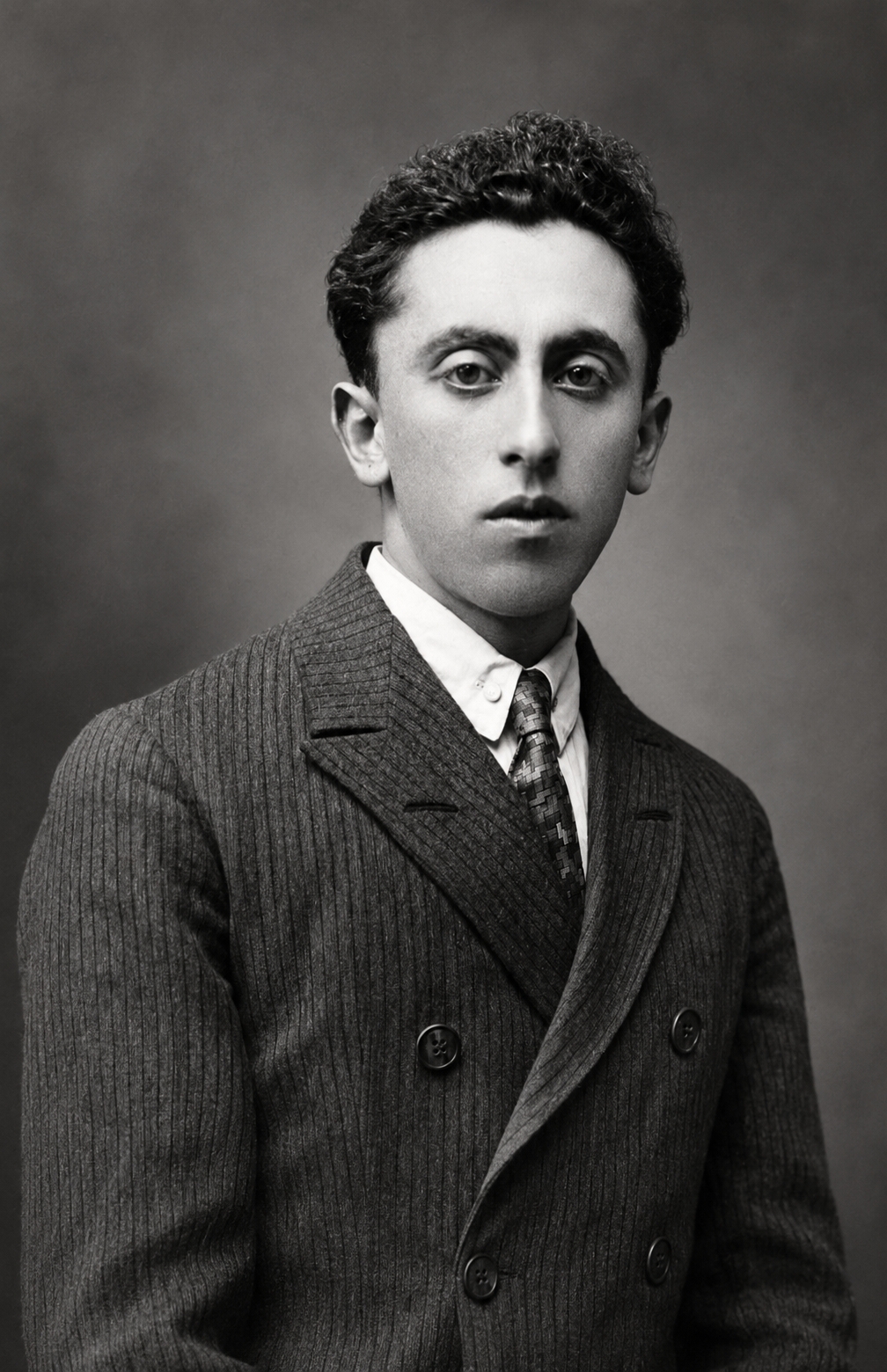
Leizer was born Lejzor Abramowicz Kacperowski on 2 April 1899 in the town of Szczuczyn, near Białystok, then part of the Russian Empire. He was the son of Abram Izraelowicz Kacperowski, a local shopkeeper, and Chaja Szejna (née Jakubcyner). At his circumcision he was given the Hebrew name Lejzor, the Yiddish form of Eliezer.
Leizer was the youngest of five brothers and he grew up in the thriving Jewish community of Szczuczyn, where Jewish merchants, craftsmen, scholars, and religious life formed the heart of the town.
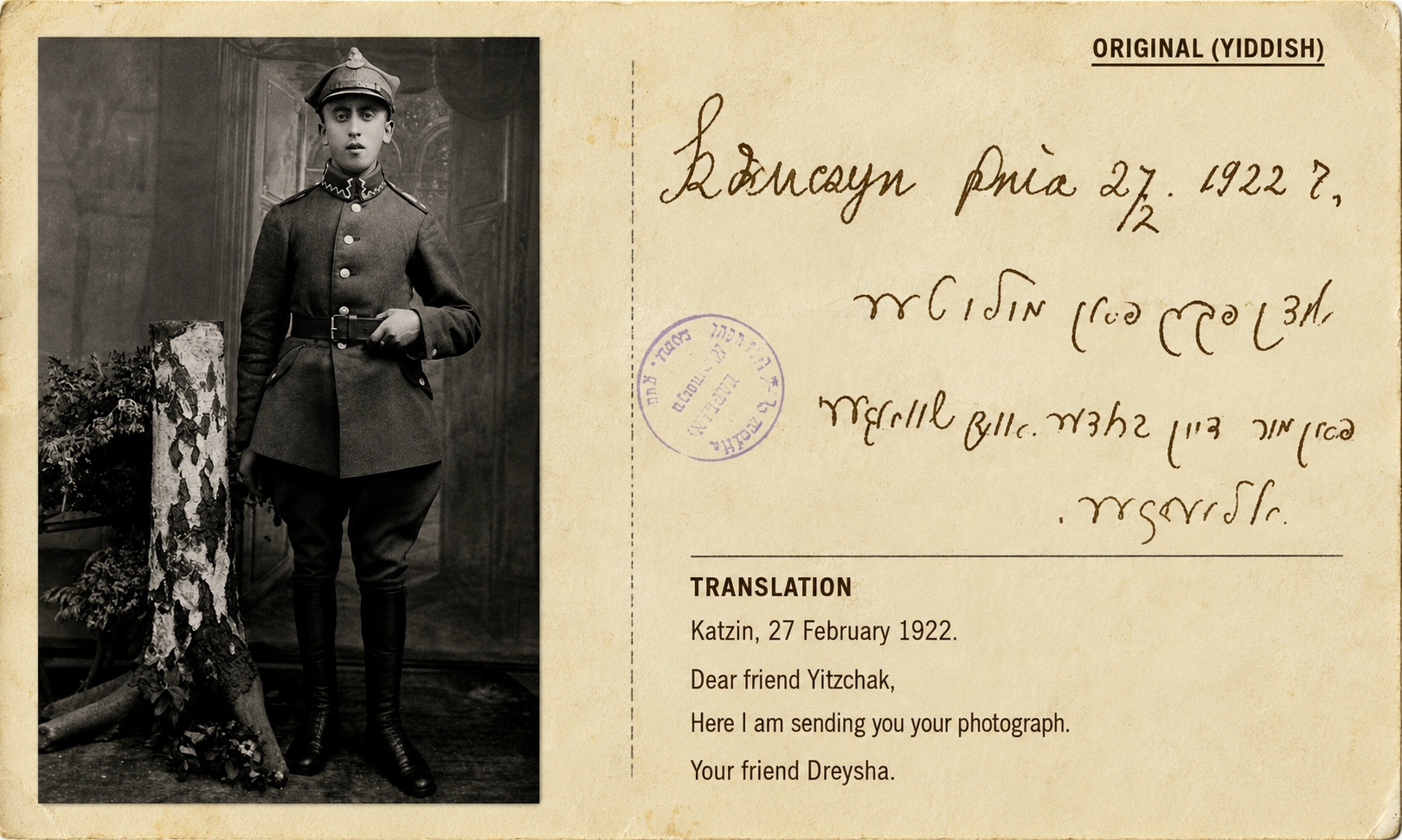
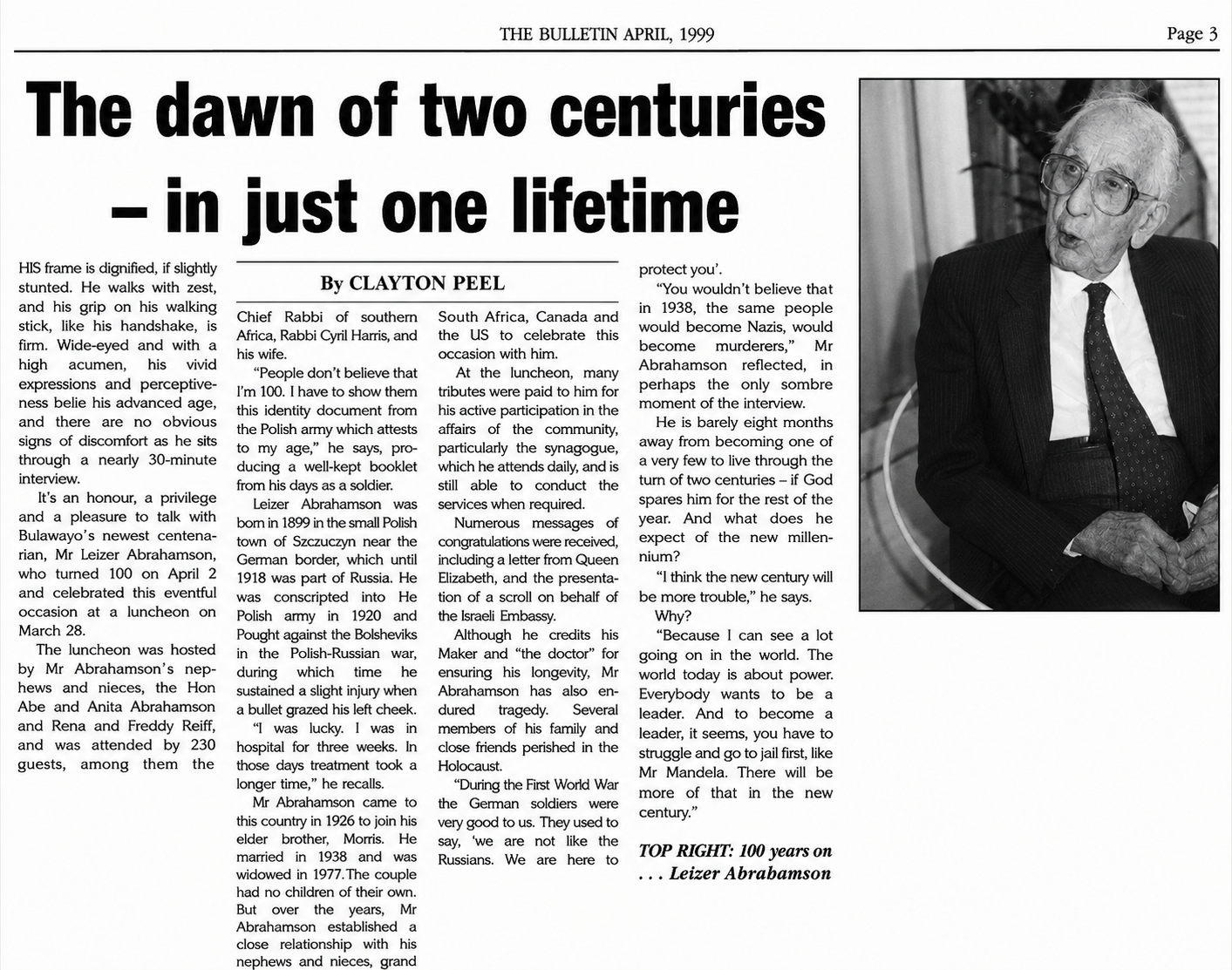
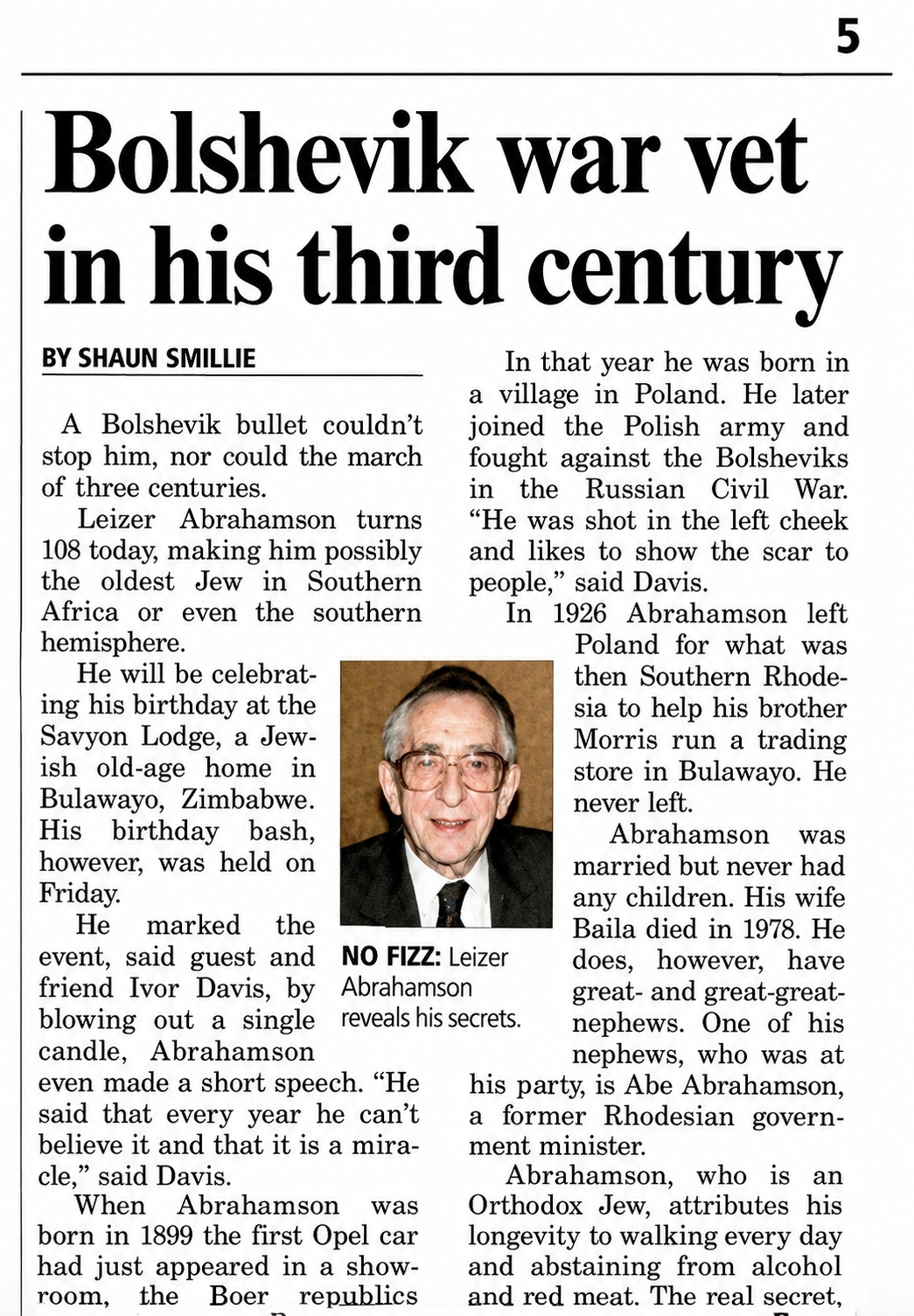
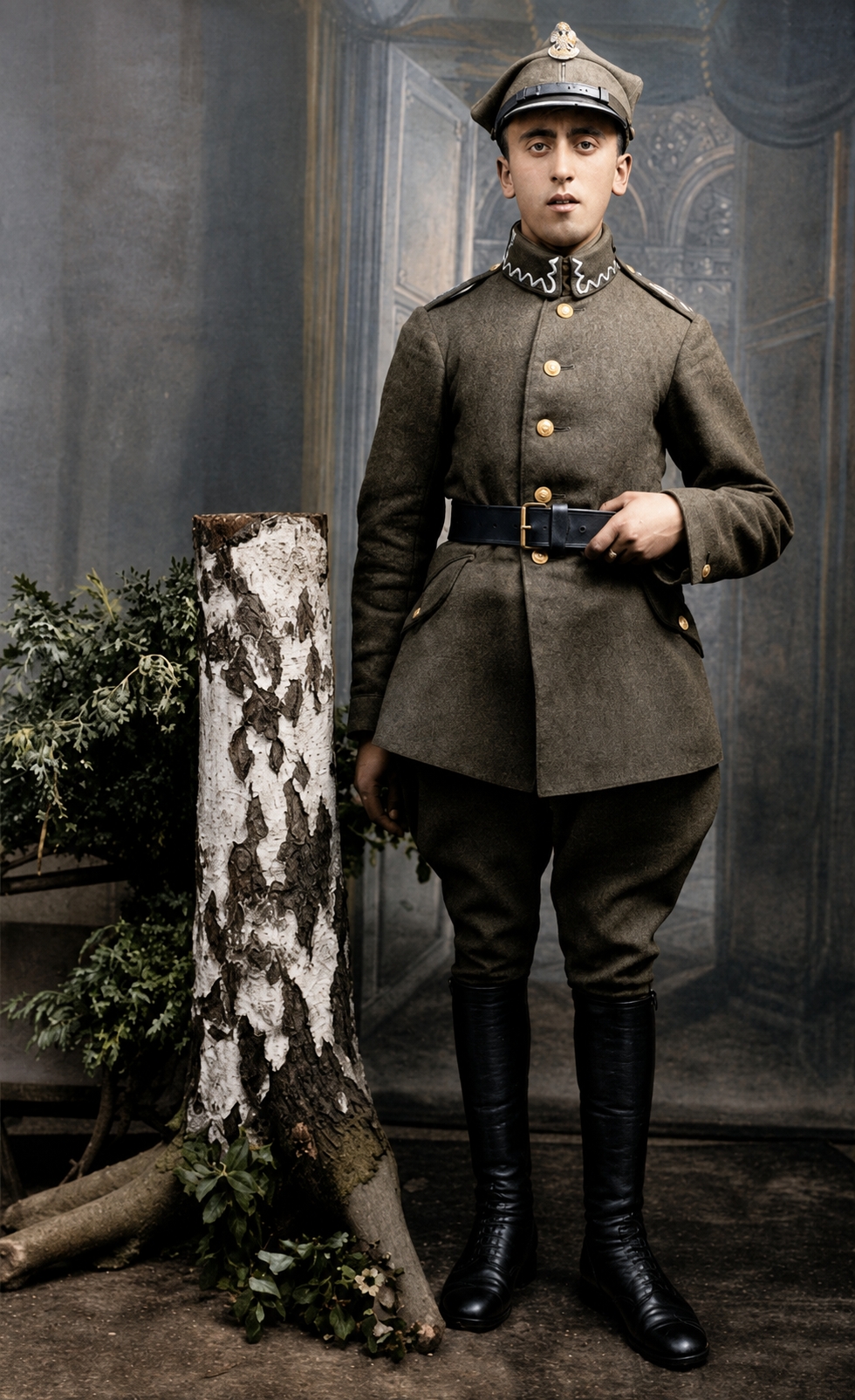
After Poland regained its independence in 1918, Leizer served in the Polish Army during the early years of the Second Polish Republic. He fought beside the Vistula against the Bolsheviks and was shot through the cheek yet luckily survived and was discharged in 1922.
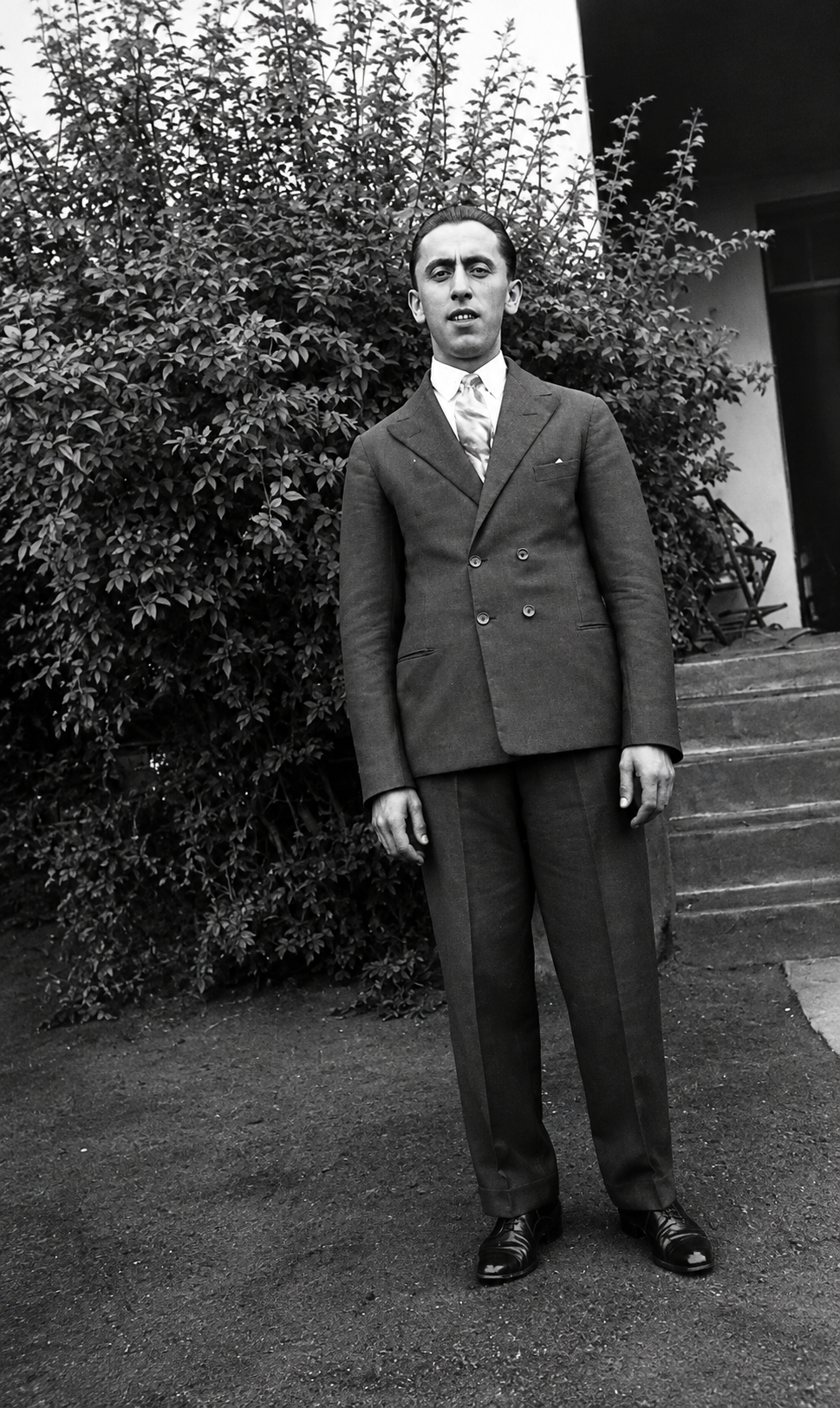
Like many Eastern European Jews seeking greater opportunity, Leizer left Poland in 1926 and travelled to Bulawayo, Southern Rhodesia (now Zimbabwe), where his older brother Morris Kaczperowski, who had adopted the surname Abrahamson, had already established himself in business.
Following the family's immigration, the brothers adopted the surname Abrahamson, derived from their father's given name, Abram (Abraham). Morris operated a successful general dealer's store before founding the Matabeleland Clothing Company (MATCO). Leizer assumed responsibility for managing the original family business while Morris devoted his efforts to expanding MATCO into one of Bulawayo's best-known clothing manufacturers.
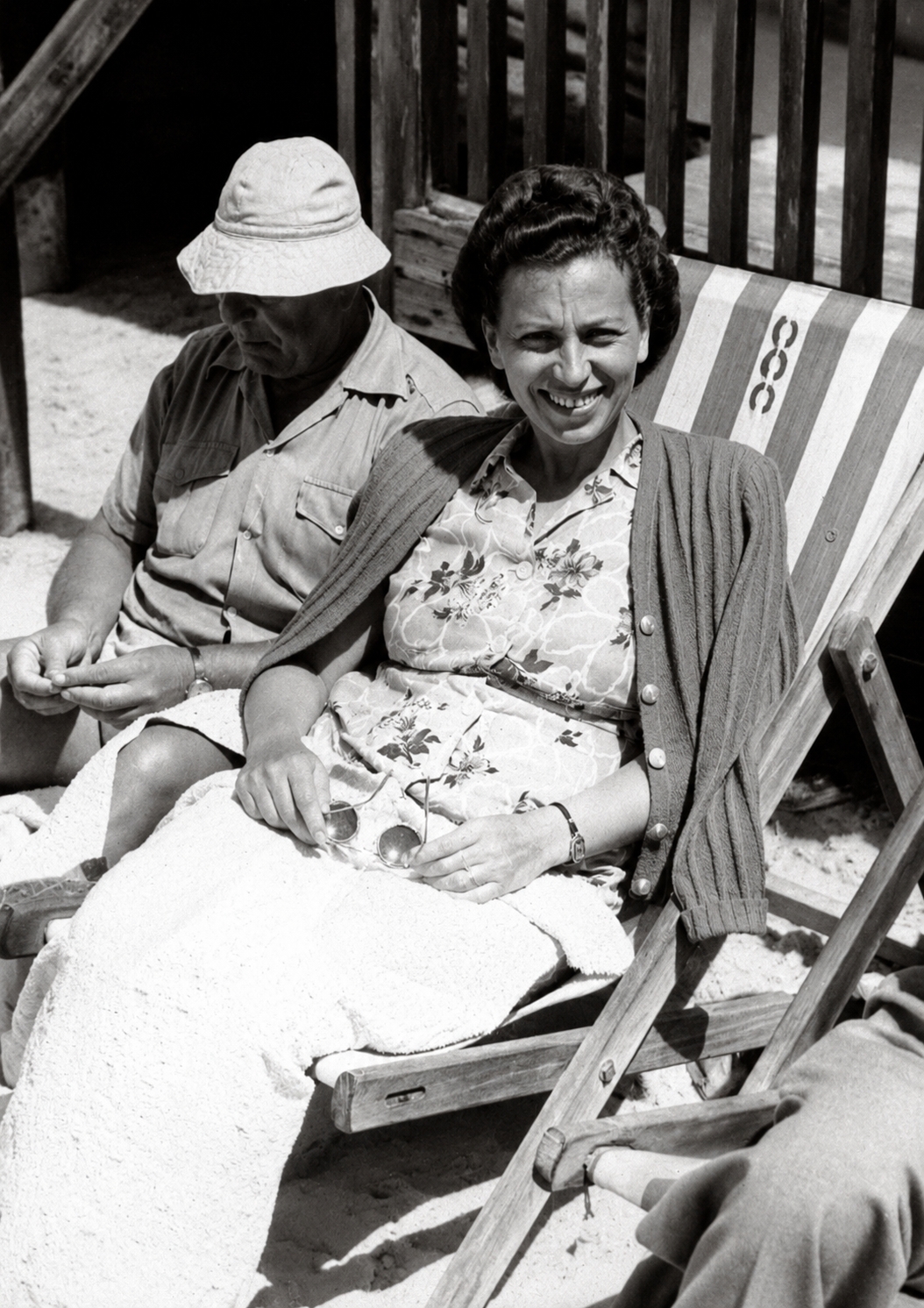
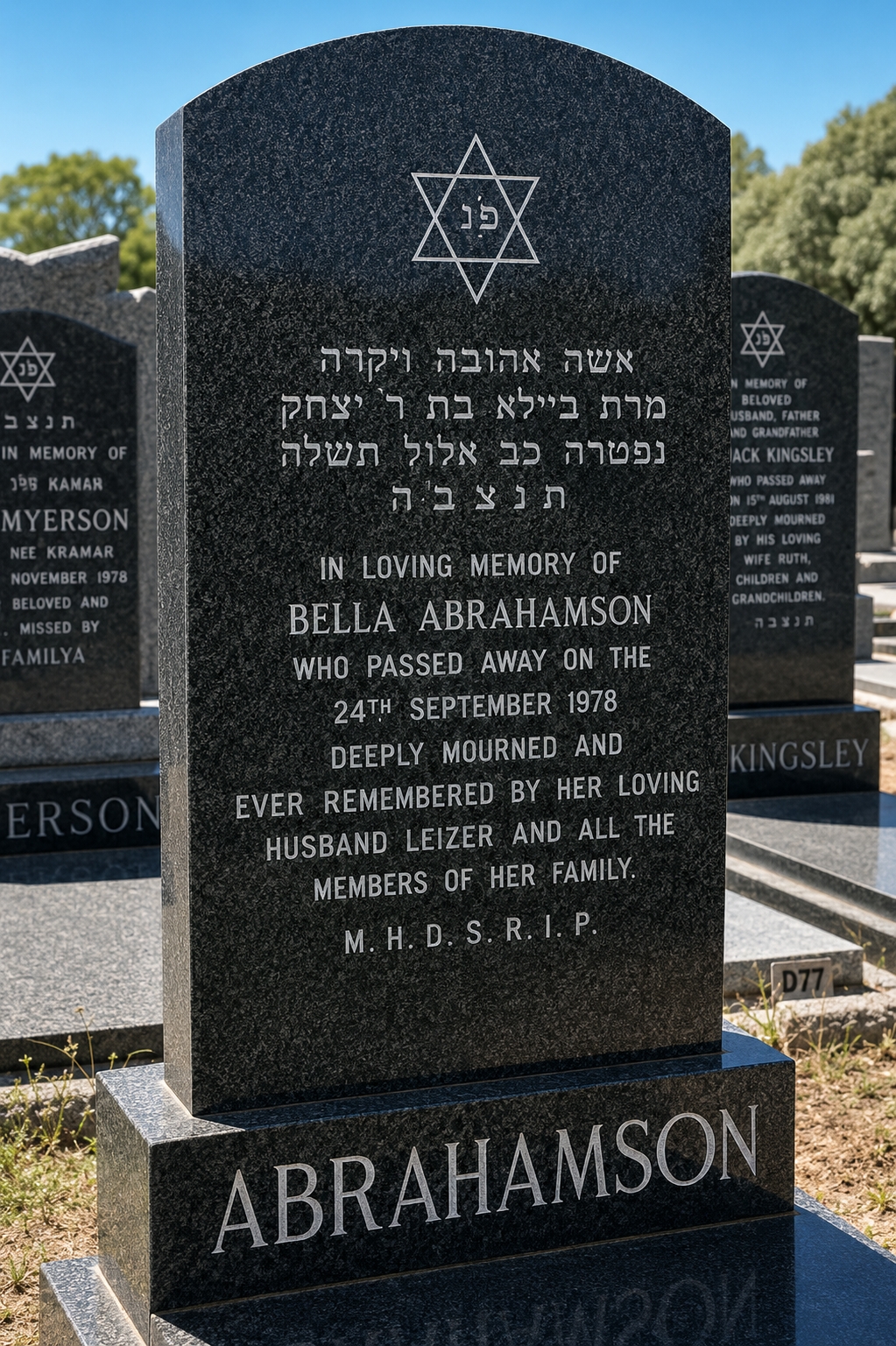
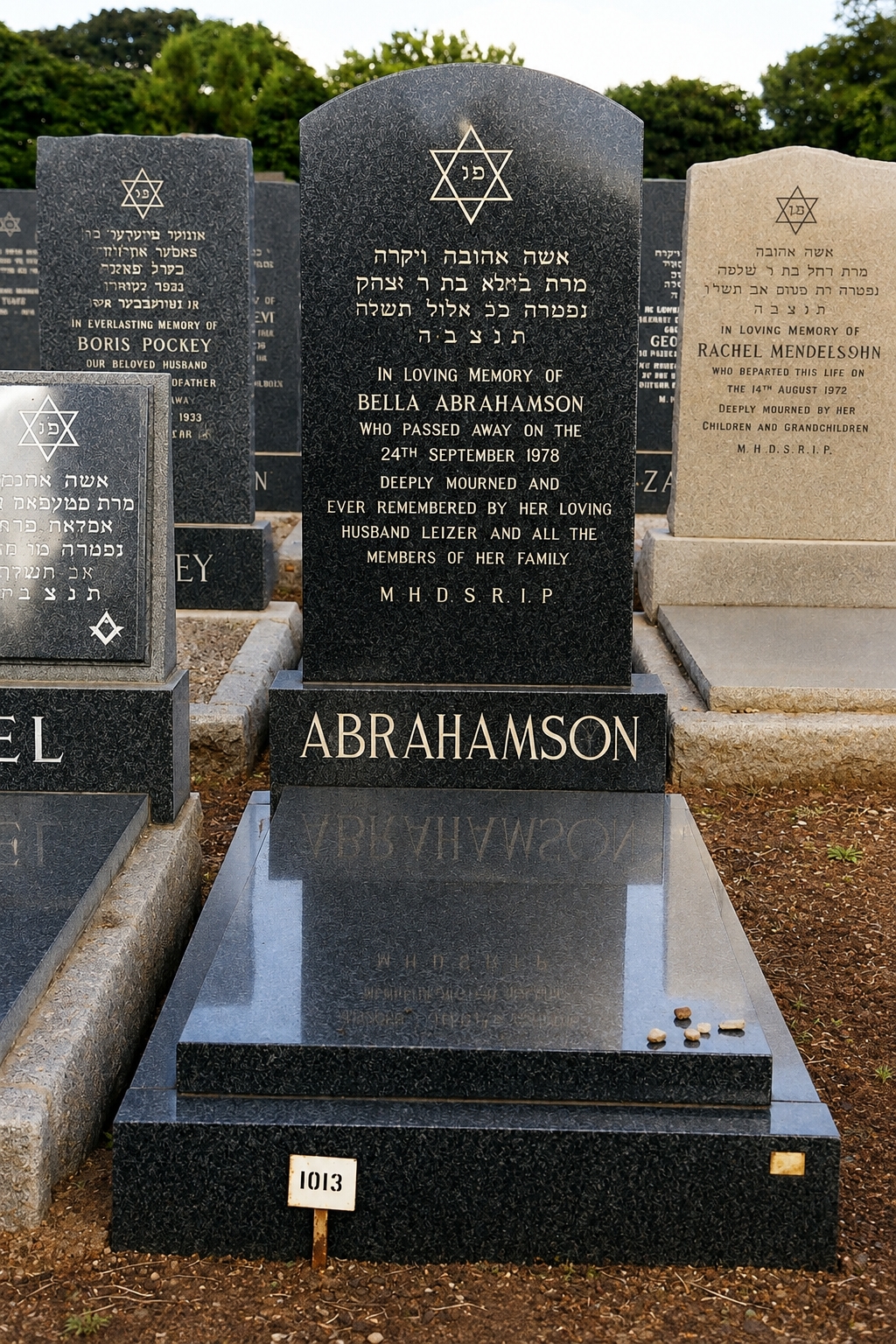
Leizer married Bella (nee Finkelstein), his second cousin also from Szczuczyn with whom he shared forty years of marriage. Although the couple had no children, Bella passed away in September 1978 at 67 years.
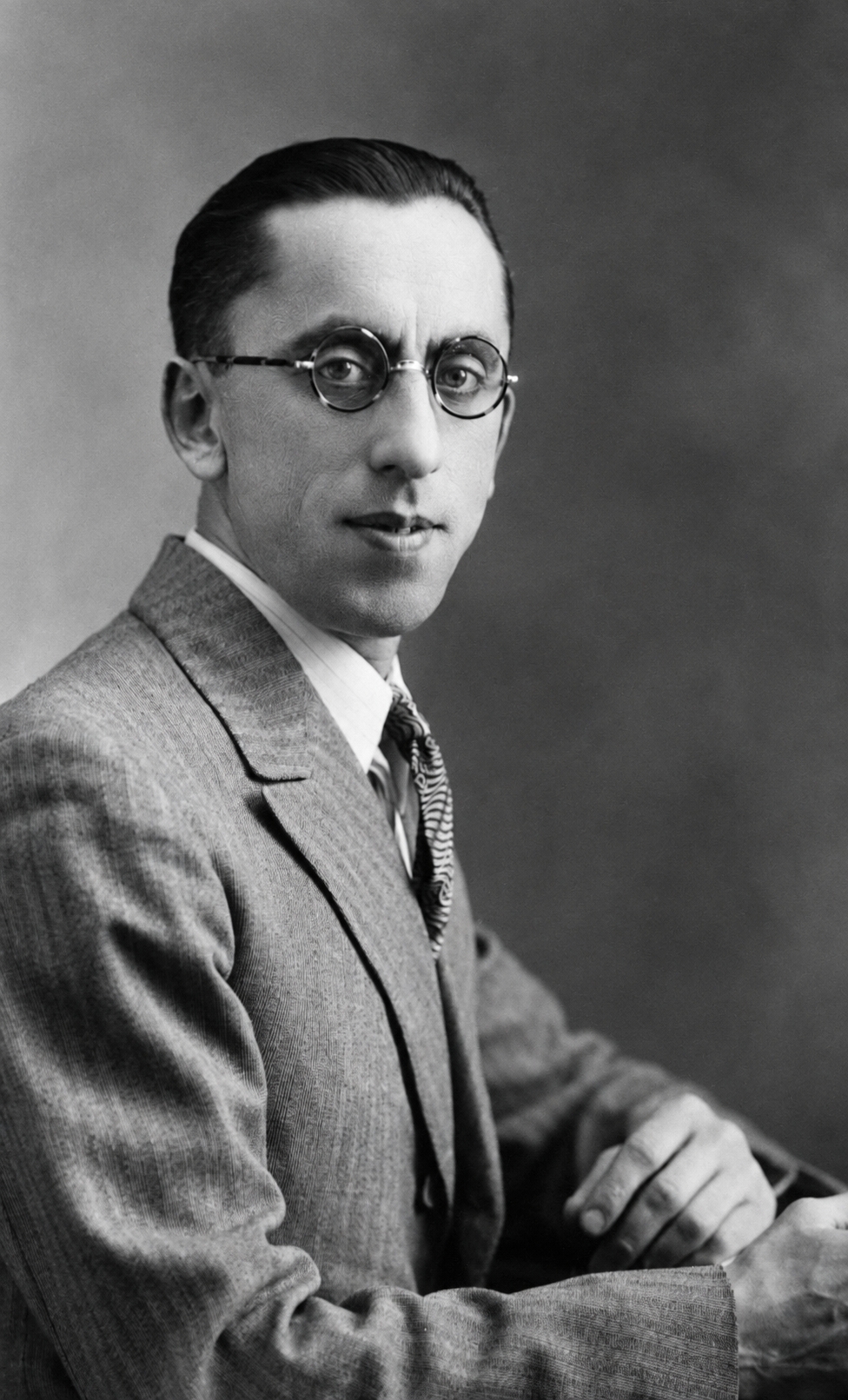
Although he never sought public office, Leizer became one of the most respected figures in Zimbabwean Jewish life. For decades he was a constant presence in the Bulawayo Hebrew Congregation, where he regularly read the Haftarah, conducted Shabbat services when needed, and quietly preserved the traditions brought from Eastern Europe. As Bulawayo's Jewish population gradually declined during the late twentieth century, Leizer became one of its living treasures.
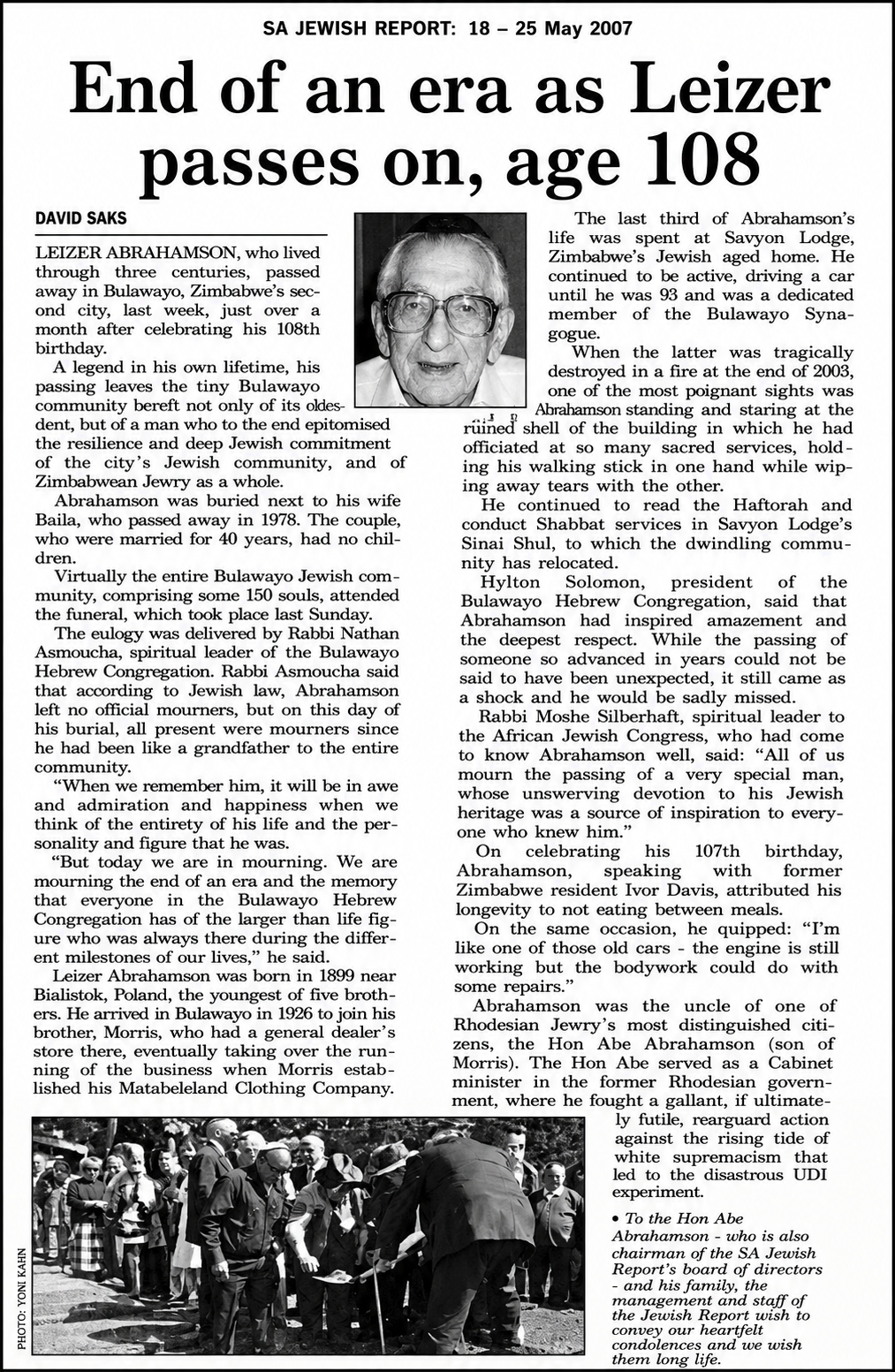
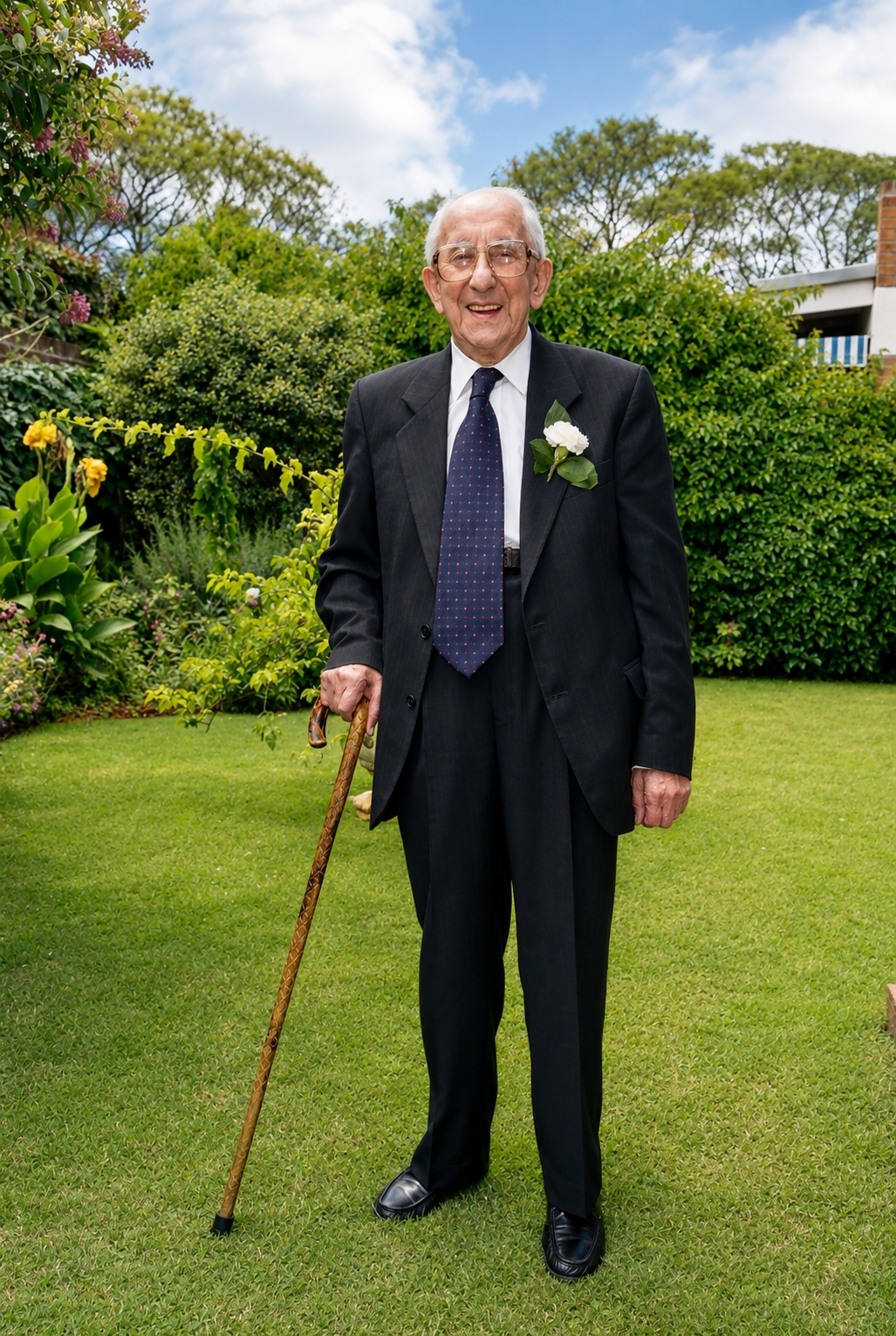
When the historic Bulawayo Synagogue was destroyed by fire in 2003, one of the most poignant images remembered by members of the community was that of the elderly Leizer standing silently before the charred remains of the building in which he had officiated for so many years, leaning on his walking stick while wiping tears from his eyes. After the fire, services moved to the Sinai Shul at Savyon Lodge, where Leizer continued reading the Haftarah and helping lead Shabbat worship well into his later years.
The final decades of Leizer's life were spent at Savyon Lodge, Zimbabwe's Jewish aged home. Even there he remained active and independent. He continued driving until the age of 93, took regular walks, and retained both his wit and remarkable memory.
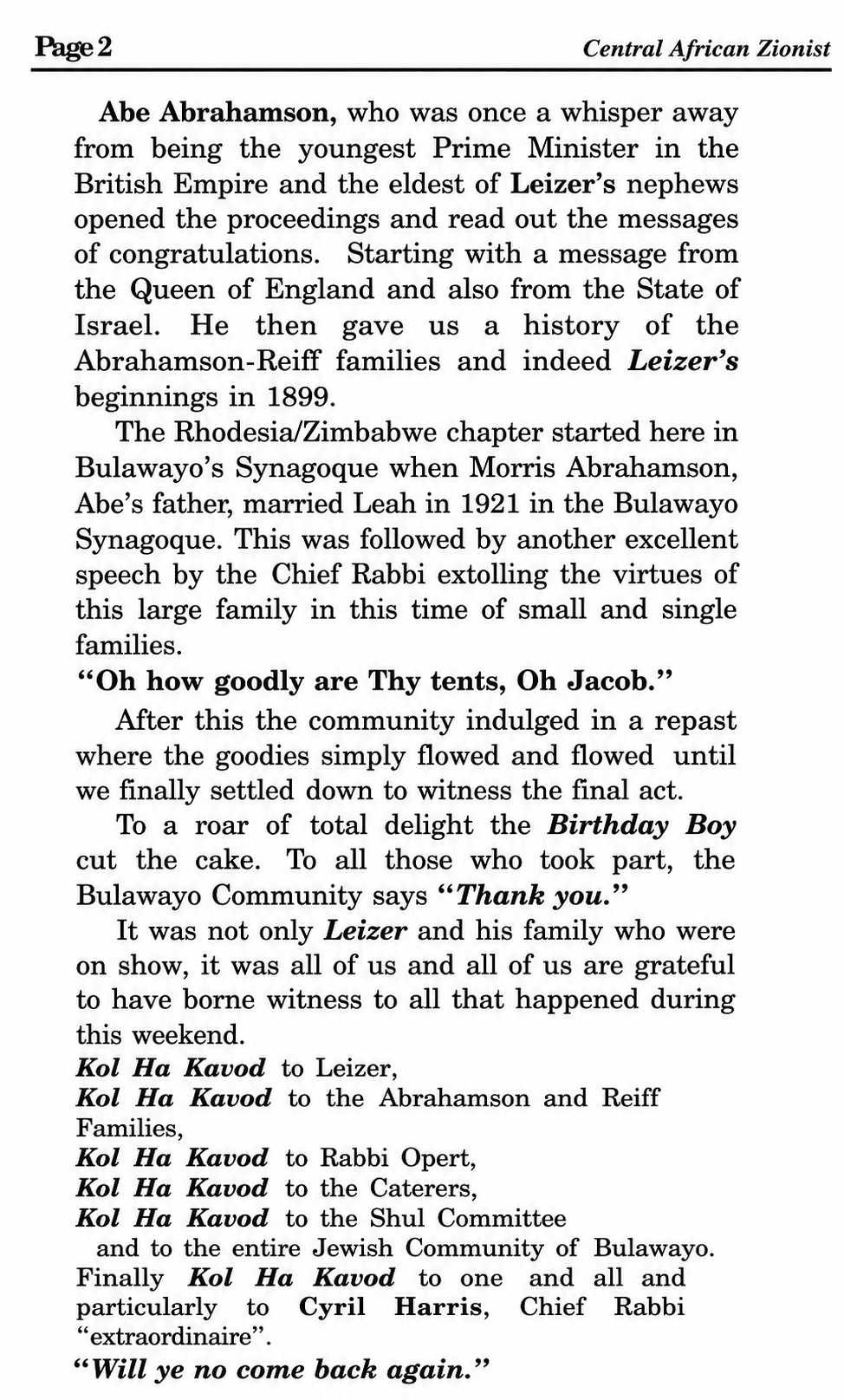
On his 107th birthday, celebrated in April 2006 with more than one hundred family members and friends, he delighted guests with his characteristic humour:
"I'm like one of those old cars—the engine is still working but the bodywork could do with some repairs."
Asked about the secret of his longevity, he offered simple advice: avoid eating between meals, stay away from fizzy drinks and alcohol, stop smoking, and keep walking.
Leizer's life spanned an extraordinary period of Jewish history. Born into the Jewish shtetl culture of eastern Europe, he survived the upheavals of the Russian Empire, witnessed the rebirth of Poland, emigrated before the Holocaust destroyed the communities of his childhood, and helped build Jewish life in Southern Africa.
As many of Bulawayo's Jewish families emigrated during the latter half of the twentieth century, Leizer chose to remain. His unwavering commitment provided continuity for a community that had once numbered in the thousands but had dwindled to only a small remnant. To younger generations he became not merely an elder, but a symbol of resilience, faith, and continuity.
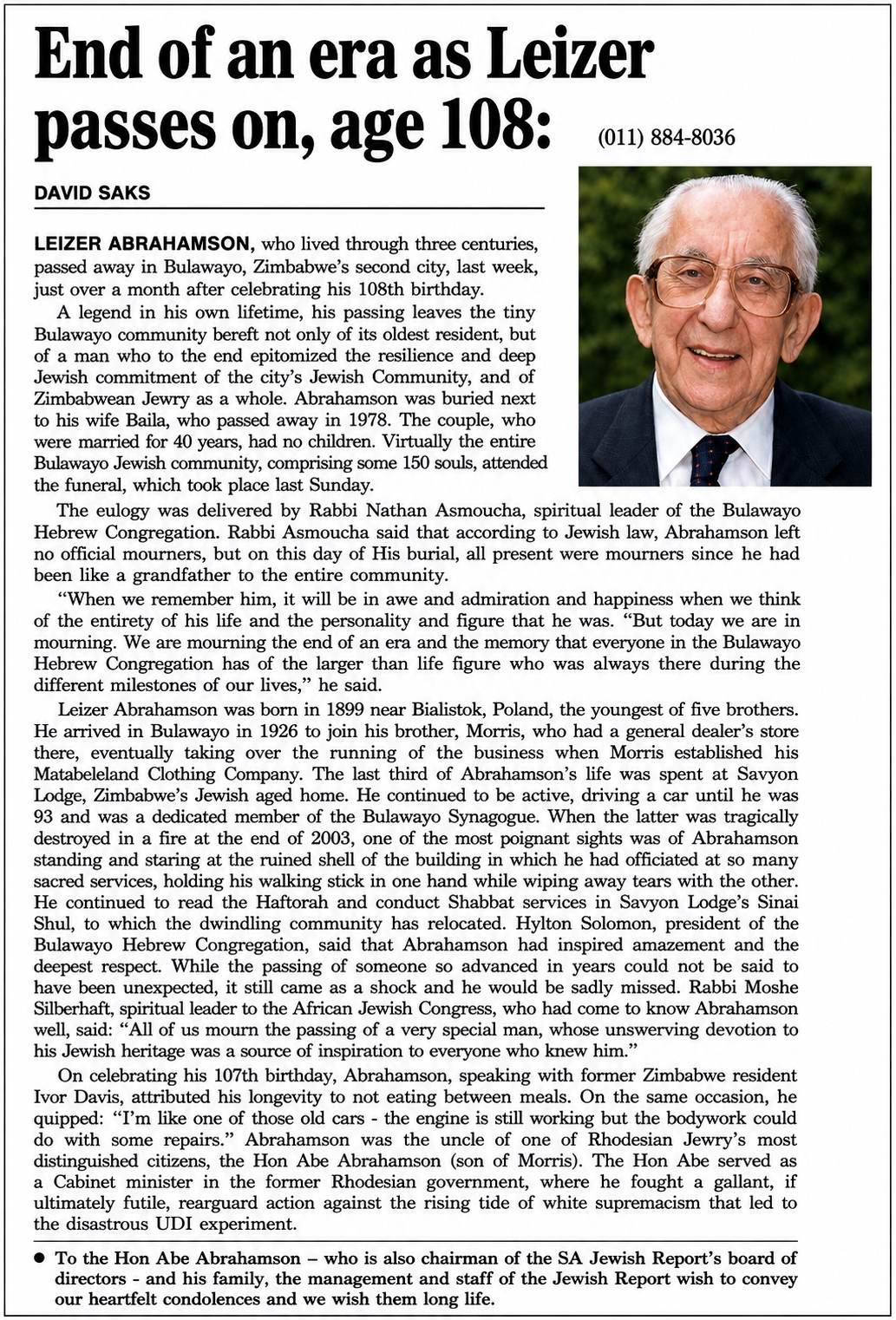
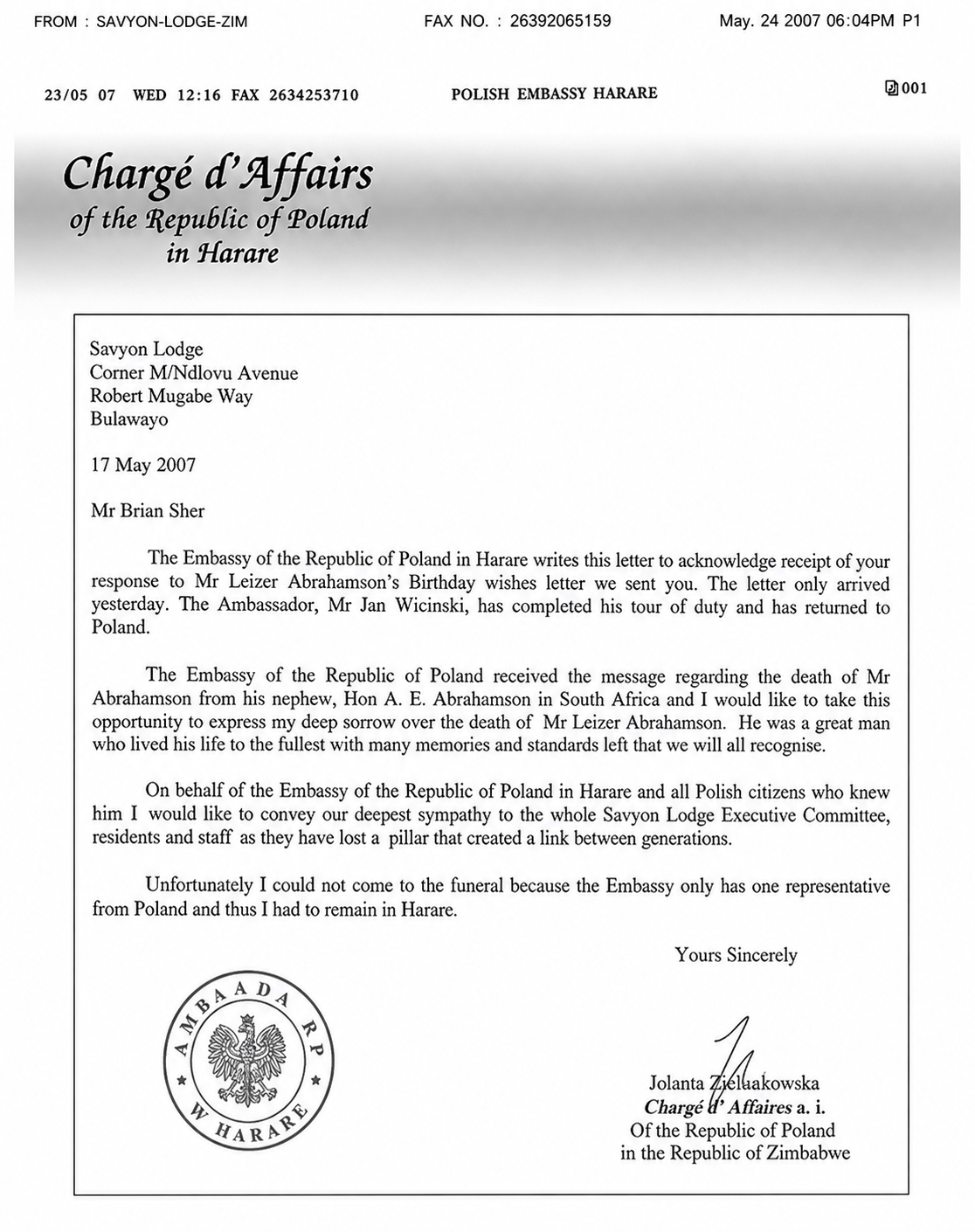
Leizer Abrahamson passed away in Bulawayo on 10 May 2007 (21st Iyar), just over a month after celebrating his 108th birthday. Virtually the entire remaining Jewish community attended his funeral.
Rabbi Nathan Asmoucha described him as a man who had become "like a grandfather to the entire community," while Rabbi Moshe Silberhaft called him "a very special man, whose unswerving devotion to his Jewish heritage was a source of inspiration to everyone who knew him."
His death truly marked the end of an era. Few individuals embodied the history of Bulawayo Jewry as completely as Leizer Abrahamson. From a childhood in a Polish shtetl to more than eighty years in Southern Africa, his life bridged continents, cultures, and centuries. Today he is remembered not only as one of Zimbabwe's oldest citizens, but as one of the last custodians of the traditions, values, and spirit that shaped the remarkable Jewish community of Bulawayo.
DOCUMENTS